
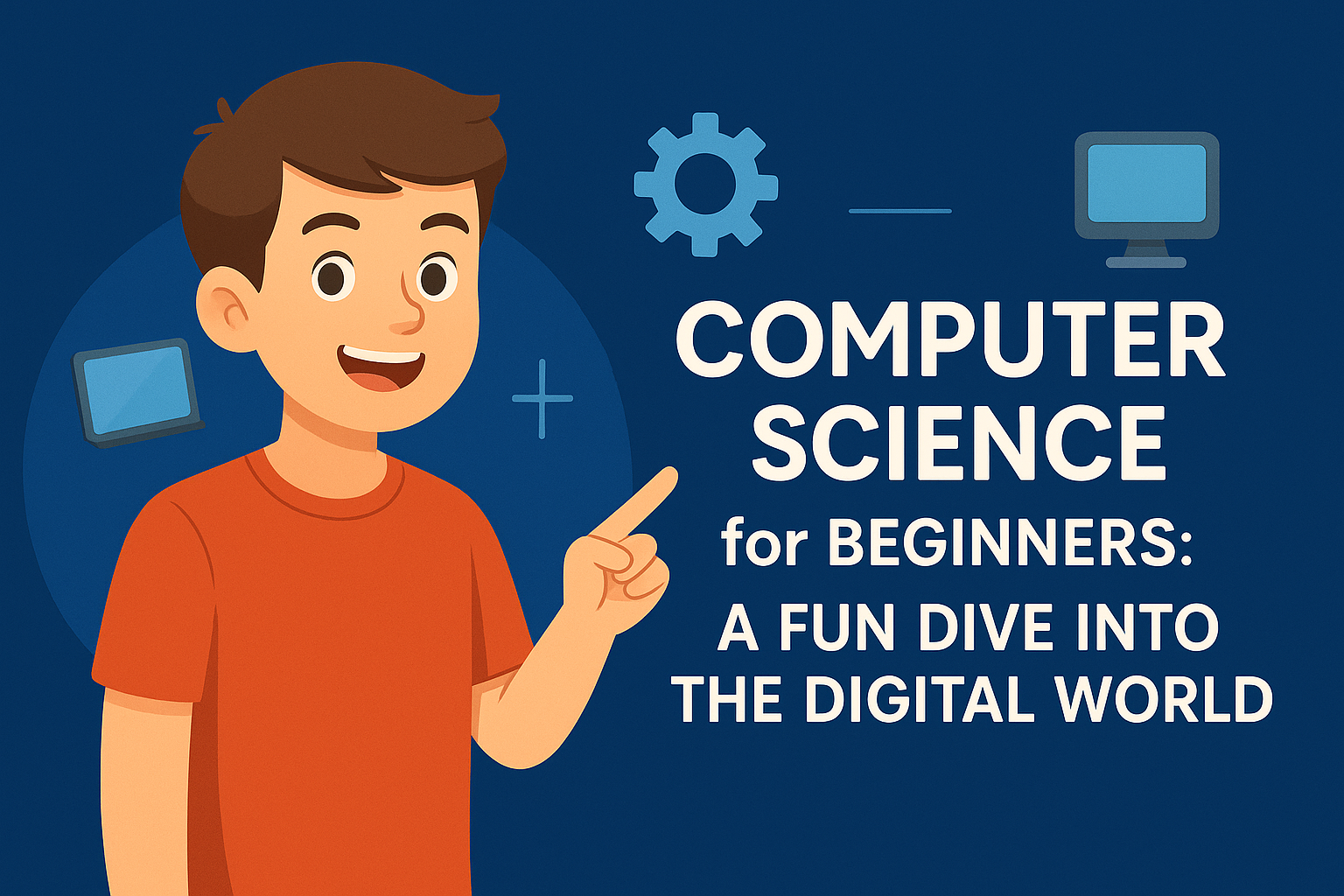
<h3>Computer Science for Beginners: A Fun Dive into the Digital World - Class 9</h3>
Welcome to the amazing world of Computer Science! Whether you're a student just starting out or someone curious about how computers work, this guide will help you understand the basics in a fun and simple way. Let’s explore the core topics from your Grade 9 Computer Science book!
</h3>Class 9 Computer Science book and Curriculum <span class="badge bg-danger">New</span></h3>
<h3>1. What is a Computer System?</h3>
A computer system is a powerful electronic machine that accepts data, processes it, and gives useful information. It works based on the IPOS cycle: Input ➝ Process ➝ Output ➝ Storage.
Features of a Computer:
- Fast: Can do in seconds what we take hours to do!
- Accurate: Does not make mistakes unless we input wrong data (GIGO – Garbage In, Garbage Out).
- Versatile: Used in schools, hospitals, banks, games, and more.
- Diligent: Works nonstop without getting tired.
Components:
- Input devices: Keyboard, mouse, microphone.
- Output devices: Monitor, printer, speakers.
- CPU (Central Processing Unit): The brain of the computer.
- Memory & Storage: RAM, ROM, Hard Drive, SSD, etc.
<h3>2. Understanding the Number System</h3>
Computers don’t understand letters like we do—they speak binary, which uses just 0s and 1s. But they can also use:
- Decimal: Numbers we use every day (0-9).
- Binary: Only 0 and 1.
- Octal: Uses digits from 0 to 7.
- Hexadecimal: Uses 0-9 and A-F.
Learning how to convert between these number systems is a cool way to think like a computer!
<h3>3. Block Programming – Coding Made Easy!</h3>
Block programming is a visual way of coding where you drag and drop blocks instead of typing. Tools like Scratch make it fun and simple to create stories, games, and animations.
Why it's awesome:
- Easy to understand.
- Great for beginners.
- Encourages creativity and logic.
<h3>4. Web Technology – How Websites Work</h3>
Ever wondered how your favorite websites like Google or YouTube work? That’s the power of web technology!
Key concepts:
HTML: Builds the structure of websites.
- CSS: Styles the website (colors, fonts).
- JavaScript: Makes websites interactive.
You’ll also learn how to create simple web pages, understand domains, and how the Internet connects everything.
<h3>5. Internet & Social Media</h3>
The Internet is a giant network connecting computers worldwide. It helps us:
- Browse websites
- Chat with friends
- Use email and apps
- Watch videos and play games
But we must also use it wisely and safely. Think before you click!
<h3>6. Cyber Security & Digital Citizenship</h3>
It’s important to be a responsible digital citizen. Here's how:
Be safe online:
- Use strong passwords.
- Don’t share personal info.
- Be kind and respectful.
Cyber threats:
- Phishing: Fake emails to steal info.
- Malware: Harmful software.
- Hacking: Breaking into systems.
Always think before you share and report anything suspicious.
<h3>7. Concept of Programming</h3>
Programming means giving instructions to a computer. It helps us:
- Build software
- Create games
- Automate tasks
You’ll learn about:
- Algorithms: Step-by-step instructions.
- Flowcharts: Visual plans.
- Basic programming languages like Python or QBASIC.
🎯 Lastly
Computer Science is not just about computers—it’s about solving problems and being creative. Whether you want to design a game, build a website, or just understand how things work, the journey starts here!
Happy Learning Guys! 🚀
Join the Conversation
0 Comments
Log in to join the discussion
No comments yet
Be the first to share your thoughts!