
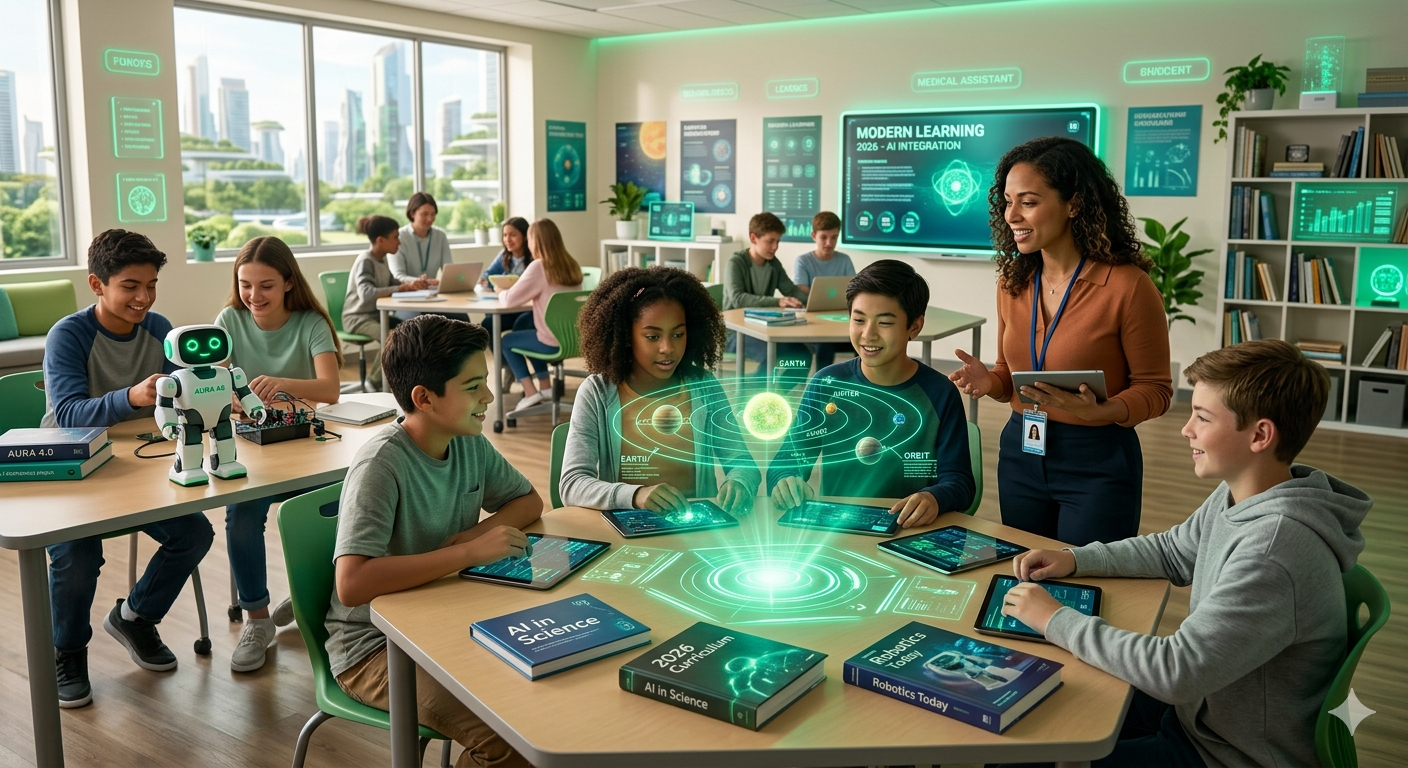
In 2026, artificial intelligence is no longer a futuristic concept—it’s a daily reality in classrooms worldwide. From adaptive learning platforms that tailor lessons to each student’s pace to AI tutors available 24/7, the way we teach and learn is evolving rapidly. As both a teacher and SEO expert, I’ve seen how embracing (or ignoring) these changes can make or break educational outcomes.
This comprehensive guide explores the transformative power of AI in education, real-world applications, potential pitfalls, and actionable strategies you can implement today.
The Current State of AI in Education (2026 Snapshot)
AI adoption in schools has accelerated dramatically. Tools powered by generative AI like advanced versions of ChatGPT, Google Gemini, and specialized platforms are helping create personalized lesson plans, grade assignments instantly, and even predict student struggles before they happen.
According to recent trends, key drivers include:
- Teacher workload reduction amid ongoing burnout concerns.
- Demand for personalized learning post-pandemic.
- Budget pressures pushing schools toward efficient tech solutions.
Yet, not all implementations are equal. Success depends on thoughtful integration rather than wholesale replacement of human elements.
Major Opportunities: How AI Enhances Learning
1. Personalized Learning at Scale
One of the biggest promises of AI is moving beyond the “one-size-fits-all” model. Adaptive platforms analyze student performance in real-time and adjust difficulty, content style, and pacing accordingly.
For example, a student struggling with algebra might receive visual explanations and extra practice, while an advanced peer gets enrichment problems. This leads to higher engagement and better outcomes, especially in diverse classrooms.
2. Intelligent Tutoring Systems
AI tutors provide instant feedback and explanations. Imagine a language learner practicing conversation with an AI that corrects pronunciation and suggests vocabulary in context. Tools now support multiple languages and learning disabilities with remarkable accuracy.
3. Administrative Efficiency for Teachers
Teachers spend less time on repetitive tasks:
- Auto-generating quizzes and rubrics
- Plagiarism detection with nuanced understanding
- Progress reporting and parent communications
This frees up time for mentoring, creativity, and relationship-building—the irreplaceable human aspects of teaching.
4. Accessibility and Inclusion
AI breaks barriers. Speech-to-text for students with writing difficulties, real-time translation for multilingual classrooms, and predictive analytics that flag students needing extra support early.
5. Immersive and Engaging Experiences
Virtual reality combined with AI creates simulated historical events, scientific experiments, or career explorations. Students can “visit” ancient Rome or dissect virtual frogs without ethical or cost concerns.
Real-World Examples and Tools in 2026
- Duolingo Max and similar platforms: Use AI for personalized conversation practice.
- Khan Academy’s AI features: Khanmigo acts as a tutor guiding students with hints rather than direct answers.
- Google Classroom + AI integrations: Auto-summarizes discussions and suggests resources.
- Specialized tools: Platforms using computer vision for handwriting analysis or emotional recognition (with privacy safeguards).
Many schools now use AI to create differentiated worksheets instantly or analyze video recordings of student presentations for feedback.
Challenges and Ethical Considerations
AI isn’t without risks. Addressing these head-on is crucial for responsible implementation.
1. The Digital Divide and Equity Issues
Not every student has reliable devices or internet. Schools must ensure AI doesn’t widen achievement gaps.
2. Data Privacy and Security
Student data is sensitive. Schools need robust policies compliant with regulations like FERPA or GDPR equivalents. Who owns the data generated by AI interactions?
3. Over-Reliance and Skill Atrophy
If students always turn to AI for answers, critical thinking and problem-solving muscles may weaken. Teachers must design activities that use AI as a collaborator, not a crutch.
4. Bias in AI Systems
AI trained on historical data can perpetuate biases in recommendations, grading, or content. Regular audits and diverse training data are essential.
5. Teacher and Student Training Gaps
Many educators feel overwhelmed. Professional development is critical—AI literacy should be part of teacher training programs.
6. Academic Integrity
AI-generated essays and code are sophisticated. Schools are shifting to process-oriented assessments, oral defenses, and AI-detection tools combined with human judgment.
Practical Strategies for Teachers and Educators
Start Small and Iterate
Begin with one tool. Try using an AI lesson planner for a week, then expand.
Design AI-Resistant Assignments
- Project-based learning with real-world application
- Reflective journals on the learning process
- Collaborative group work with peer evaluation
- Personalized portfolios
Teach AI Literacy
Dedicate class time to prompt engineering, fact-checking AI outputs, and understanding limitations. This is a vital 21st-century skill.
Hybrid Human-AI Approach
Use AI for routine tasks and reserve your energy for high-value interactions: emotional support, creativity coaching, and deep discussions.
For Administrators
- Invest in professional development
- Create clear AI usage policies with student and parent input
- Pilot programs before full rollout
- Monitor equity metrics closely
Strategies for Students and Parents
Students should treat AI as a powerful study buddy:
- Use it to explain concepts in different ways
- Generate practice questions
- Brainstorm ideas (then develop them originally)
Parents can encourage balanced use: set screen-time boundaries and discuss AI outputs together.
The Future Outlook: 2026 and Beyond
By late 2026 and into 2027, we’ll likely see more multimodal AI (handling text, image, video seamlessly), better emotional intelligence in tutoring systems, and integration with wearable tech for attention and stress monitoring.
Neuroeducation insights combined with AI could create truly brain-aligned learning experiences. However, the core mission remains: technology should amplify human potential, not replace it.
Conclusion: Embracing AI Thoughtfully
AI is transforming education in profound ways—offering unprecedented personalization, efficiency, and access. Yet its success depends on wise implementation by caring educators.
As teachers, our role is evolving from sole knowledge providers to facilitators, mentors, and AI-orchestrators. By focusing on human strengths—empathy, creativity, ethical reasoning—we can harness AI to create more equitable, engaging, and effective learning environments.

Join the Conversation
0 Comments
Log in to join the discussion
No comments yet
Be the first to share your thoughts!